Dropper Posts

From Budget to Baller: Six MTB Dropper Posts Reviewed

Chris Friend, Social Media Manager & Multimedia Specialist
Chris F.
Social Media Manager & Multimedia Specialist · Updated May 2026 · 9-minute read

A dropper post is one of the highest-impact upgrades you can make to any mountain bike. With a flick of your thumb, the saddle drops out of the way for technical descents — and snaps back to full climbing height the moment you need it. Six picks covering every budget and riding style, from a $90 cable-pull closer to a fully wireless, electronically actuated post that talks to your shifters.

Three Things That Determine Whether a Dropper Post Fits Your Bike

Before you pick a brand, nail these three specs. Get any one wrong and the post either won't install or won't perform the way it should.

Drop Travel
The total saddle movement range, typically 90–250mm. Match it to your frame's available insertion depth — the gap between your minimum saddle height and the top of the collar. More travel means more clearance on steep descents, but your frame has a ceiling.
Seatpost Diameter
Your frame's seat tube bore is either 30.9mm, 31.6mm, or 34.9mm — one of these, not your choice. Look it up in your frame's manual or measure the old post before ordering. A shim can step a 30.9mm post up to a 31.6mm bore, but not the other way.
Actuation Method
Cable-actuated posts (all five non-AXS posts here) use a mechanical lever and housing run through or along the frame. Wireless posts like the RockShox Reverb AXS skip the cable entirely — no housing, no barrel adjusting, just a controller paired over Bluetooth.

Internal routing — where the cable runs inside the frame — is now standard on all quality droppers. If your frame only has external ports, confirm the post you're considering ships with an external barrel adjuster, or look for a post explicitly listed as external-compatible.

Cable-Actuated vs. Wireless

The biggest fork in the road. Both work well; they serve different riders. Wireless is the future, but cable is still the better choice for most.

Cable-Actuated

  • Lower entry price — quality posts start well under $300
  • No battery to charge or manage
  • Generally lighter — less electronics onboard
  • Compatible with any brake lever or remote
  • Cable housing adds cockpit clutter
  • Cable tension can drift; occasional barrel adjustment needed

Best for: Riders who want maximum performance per dollar, home mechanics, and anyone running a mixed drivetrain that isn't already in the SRAM AXS ecosystem.

Wireless (AXS)

  • No dropper cable — dramatically cleaner cockpit
  • Maps to any AXS controller or shifter button
  • ActiveRide compliance when compressed — subtle trail smoothing
  • Shared battery with AXS drivetrain — one charger for everything
  • Significant price premium — $599 and up
  • Battery management is a real responsibility — dead battery, no drop

Best for: Riders already in the SRAM AXS ecosystem who want a wire-free build, or anyone who prioritizes cutting-edge tech and a clean cockpit above all else.

Six Posts at a Glance

The key specs side by side — before you dive into the individual reviews below.

Post Tier Travel Diameters Lever Incl. Wireless Standout
SDG Tellis (1x) Entry 125–170mm 30.9 · 31.6 · 34.9 Best value, everything included
SDG Tellis V1 (MM) Entry 100–200mm 30.9 · 31.6 MatchMaker clamp, Trelleborg seals
PNW Loam Gen 2 Mid-Range 125–225mm 30.9 · 31.6 · 34.9 Tool-less travel adjust, lifetime warranty
OneUp V3 Performance 90–240mm 27.2 · 30.9 · 31.6 · 34.9 Lightest in class (415g), widest size matrix
BikeYoke Revive 3 MAX Performance 125–213mm 34.9 only Trailside Revive bleed, repairable cartridge
RockShox Reverb AXS Premium 100–250mm 30.9 · 31.6 · 34.9 N/A Fully wireless, ActiveRide compliance

* Lever Incl. refers to a dropper remote lever. The Reverb AXS is wireless — it pairs to an AXS controller sold separately. Tap any post name for current pricing and full specs.

Featured in This Guide

Six Droppers Worth Considering

Two SDG OE closeout options at unbeatable value, three performance cable posts, and one fully wireless outlier. Something for every rider and every budget.

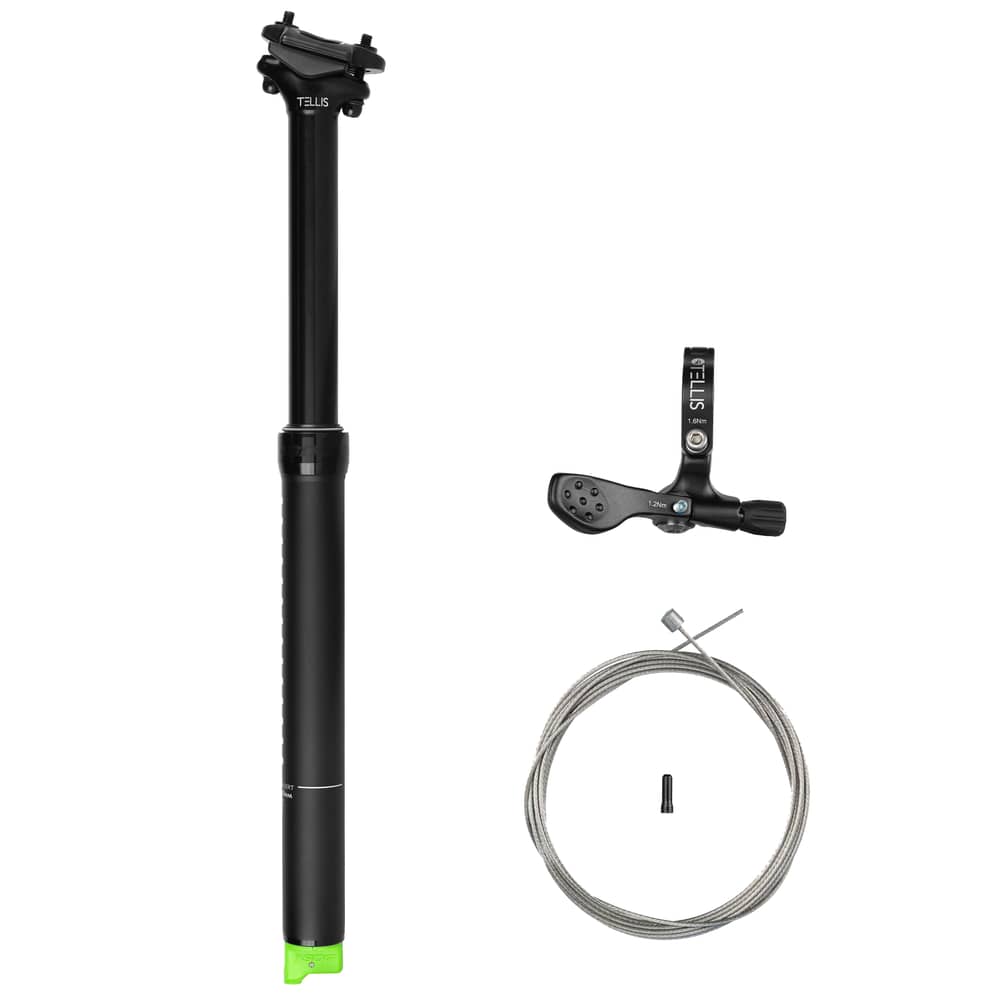
SDG Tellis Dropper Post with 1x Lever OE Packaged
SDG
Tellis Dropper Post with 1x Lever — OE Packaged
125–170mm travel · 30.9, 31.6, 34.9mm · 1x lever included · Keyway system reduces head play · Internal routing · Trail / All-Mountain
Shop Now
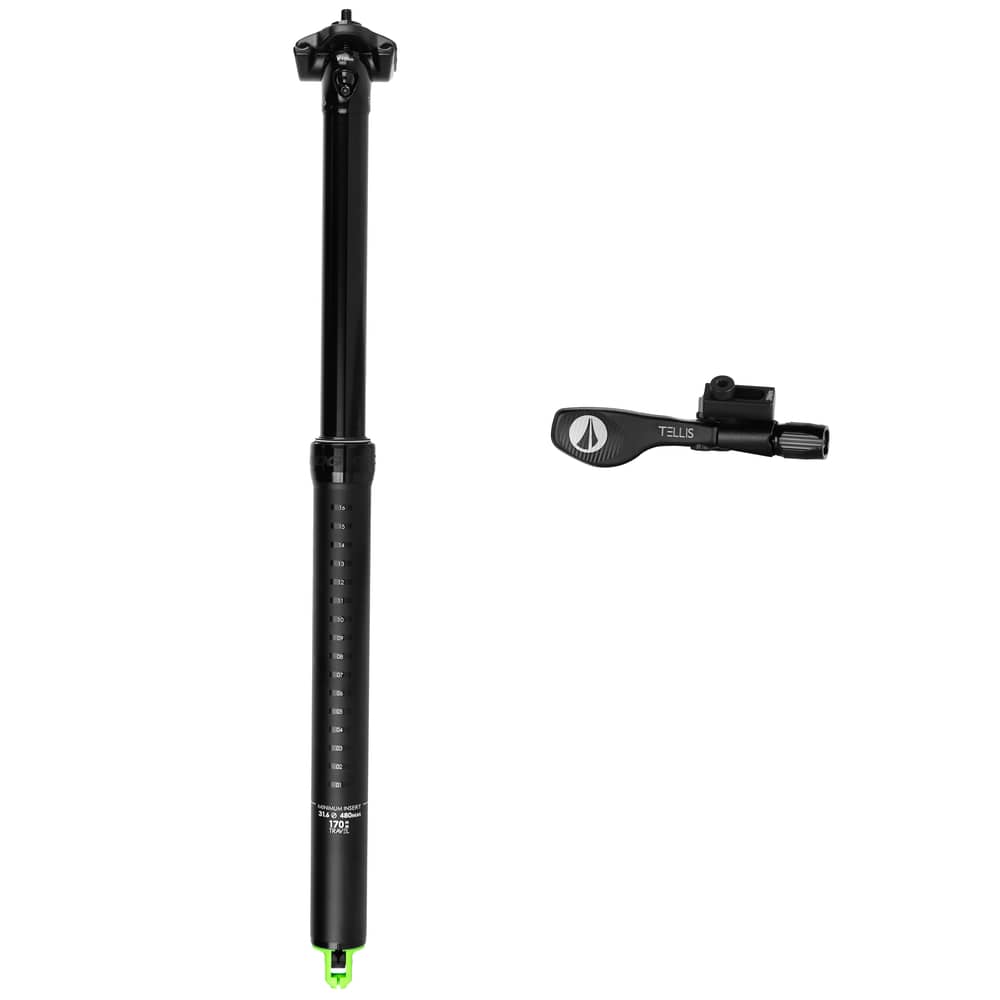
SDG Tellis V1 Dropper Post with MM Lever OE Packaged
SDG
Tellis V1 Dropper with MatchMaker Lever — OE Packaged
100–200mm travel · 30.9, 31.6mm · MM lever clamp included · Trelleborg seals to −20°C · IGUS bushings · Internal routing
Shop Now
PNW Loam Dropper Post Gen 2
PNW Components
Loam Dropper Post Gen 2
125–225mm travel · 30.9, 31.6, 34.9mm · Tool-less travel adjust · Dual-chamber sealed cartridge · 452–700g · Lifetime warranty
Shop Now
OneUp Components V3 Dropper Post
OneUp Components
V3 Dropper Post
90–240mm travel · 27.2, 30.9, 31.6, 34.9mm · 415g at 150mm — lightest in class · SKF seals / IGUS bushings · Infinitely adjustable
Shop Now
Bike Yoke Revive 3 MAX Dropper Post
BikeYoke
Revive 3 MAX Dropper Post
125–213mm travel · 34.9mm only · Trailside Revive bleeder · Cartridge is repaired, not replaced · 360° rotatable foot · 28mm upper tube
Shop Now
RockShox Reverb AXS Seatpost
RockShox
Reverb AXS Seatpost (B1)
100–250mm travel · 30.9, 31.6, 34.9mm · Fully wireless · ActiveRide compliance · Shared AXS battery · Maps to any AXS controller
Shop Now

Tap any card for current pricing, available sizes, and full specs. Prices on sale items change frequently.

Still Choosing?

Match Your Ride to a Post

Find your scenario and we'll point you straight to the pick that fits.

First dropper / maximum value
You want the upgrade without the sticker shock. Both SDG OE options include a lever and everything needed to install — rare at this price. Simple, proven mechanics that just work. Best picks: SDG Tellis (1x Lever), SDG Tellis V1 (MM Lever).
Feature-rich trail post
You want tool-less travel adjustment, up to 225mm of drop, a replaceable cartridge, and the peace of mind of a lifetime warranty — all without crossing into performance pricing. Best pick: PNW Loam Gen 2.
Weight-conscious or unusual frame
You're counting grams, or you have a frame with a weird size or short insertion depth. The V3's massive size matrix (27.2 through 34.9mm, 90–240mm travel) and 415g claimed weight at 150mm make it the most versatile light post available. Best pick: OneUp Components V3.
Home mechanic / serviceability first
You'd rather repair than replace and you want a post that won't send you to a shop every time it acts up. The Revive 3's trailside bleed, repairable cartridge, and included housing make it the most wrench-friendly option in this lineup. Best pick: BikeYoke Revive 3 MAX.
AXS ecosystem / clean cockpit obsessive
You're already running AXS shifting and you want to eliminate the last cable on your bike. No housing to route, no barrel adjusting, programmable to any button on any AXS controller. Just keep the battery charged. Best pick: RockShox Reverb AXS.

How to Install a Dropper Post

1
Confirm Diameter and Minimum Insertion Depth

Measure your frame's seat tube bore (30.9, 31.6, or 34.9mm) and verify the frame's minimum insertion depth against your saddle height. Set your saddle at full climbing height, measure from the top of the collar to the bottom of the saddle clamp — that's your working insertion length. The post you choose must meet or exceed it.

2
Route the Housing (or Stage Your Remote)

For cable-actuated posts: run the outer housing through the frame's dropper port and up to the cockpit before inserting the post — threading cable through a sealed frame is far easier with the post out of the way. For wireless Reverb AXS: download the SRAM AXS app, then pair the controller after installation.

3
Insert the Post and Set Saddle Height

Grease the post lightly and slide it into the frame. Set your saddle to full climbing height using a dropper-compatible saddle rail clamp. Snug the seat collar enough to hold position without fully torquing — you may need to adjust once the cable is tensioned. Confirm the post clears the top tube when fully dropped.

4
Attach the Cable and Mount the Lever

Thread the inner cable from the lever down through the housing to the post's cable anchor. Seat the cable head firmly and snug the pinch bolt. Mount the lever at a natural thumb angle on the handlebar — usually just inboard of the grip. Tension the cable via the barrel adjuster so the post drops crisply and returns fully without hesitation.

5
Set Travel (If Adjustable)

Most quality posts let you reduce travel using included spacers or a bushing collar — no tools required on the PNW Loam, OneUp V3, and BikeYoke Revive. The PNW Loam adjusts in 5mm steps, up to 25mm total; the OneUp V3 and BikeYoke Revive in 10mm or 20mm steps. Reducing travel makes sense when your frame's insertion depth limits full extension, or when you simply prefer a shorter drop for your riding style.

6
Test Before You Ride

Sit on the bike with full body weight. The post should stay at full extension without drifting. Actuate the lever: the post should drop immediately and return fully with authority. Torque the seat collar to the frame spec and the lever clamp to the post manufacturer's spec. If the post drifts down under load, add a quarter-turn to the barrel adjuster.

Remotes, Levers, and More

Most posts in this roundup don't include a lever. Here's where to find one — and the rest of our dropper post selection.

Dropper Remotes

Thumb levers, under-bar remotes, and MatchMaker-compatible clamps for cable-actuated posts. Shop by brand and clamp diameter.

Shop Dropper Remotes ›
All Dropper Posts

The full Jenson dropper lineup across every brand, diameter, and travel option — including posts not covered in this roundup.

Shop All Dropper Posts ›
All Components

Seatposts, stems, bars, pedals, brakes — everything else your build needs while you're at it.

Shop Components ›

Frequently Asked Questions

How much drop travel do I actually need?
Match travel to your frame's available insertion depth, not an arbitrary target. Measure from the top of your seat collar to the underside of your saddle clamp at your normal climbing height — that's the insertion you're working with. On most trail and enduro bikes, 150–200mm of drop is the sweet spot. XC and shorter riders often land at 100–125mm. Posts like the OneUp V3 and PNW Loam Gen 2 offer tool-less travel reduction so you can buy a longer post and dial it down without penalty.
How do I know what seatpost diameter my frame takes?
Check your frame's spec sheet or pull out the existing post and read the diameter stamped on it — it's almost always molded or printed near the clamp end. The three modern standards are 30.9mm, 31.6mm, and 34.9mm. If your frame spec'd a 30.9mm and you want a 31.6mm post, a $10 aluminum shim will bridge the gap. Going the other direction doesn't work.
Can I install a dropper post myself?
Yes, for most frames. If your frame has a dedicated dropper port (a cable entry hole at the bottom bracket area), you'll route housing, insert the post, and connect the lever — a two-hour job with basic tools. Frames without a dedicated port may require external routing, which is faster. Full suspension frames with tight cable paths can add complexity; check your frame manual for routing instructions first. The SDG Tellis includes everything you need to start riding immediately.
Is the wireless RockShox Reverb AXS worth the price premium?
If you're already running SRAM AXS shifting, yes — eliminating the dropper cable completes a fully wireless drivetrain, shares one battery charger across the entire bike, and makes the Reverb mappable to any button on any AXS controller. If you're not in the AXS ecosystem, the value math is harder to justify: a cable-actuated post at half the price will perform nearly as well on trail. The ActiveRide compliance feature is a genuine differentiator, but most riders won't notice it on anything but technical climbs.
What's the difference between internal and external cable routing?
Internal routing threads the cable housing through the frame's seat tube and exits through a port, keeping the cable invisible. External routing runs the housing along the outside of the frame, often secured with cable guides or frame bags. Internal is cleaner and protects the cable from trail debris; external is easier to install and works on frames that don't have a dropper port. All six posts in this roundup support internal routing. If your frame only has external capability, confirm the post ships with the right external barrel adjuster hardware.
How often do dropper posts need service?
Most quality dropper posts will run one to two seasons of regular trail riding before needing attention. Signs it's time: the post drifts downward under body weight (first try cable tension; if that doesn't fix it, the post needs internal service), the action feels notchy or sticky, or there's side-to-side play at the head. The BikeYoke Revive 3 can often be field-reset using its trailside bleed lever before a full service is needed. The OneUp V3 has a recommended service interval of 350 hours.
Do I need to buy a lever separately?
It depends on which post you choose. Both SDG OE options in this roundup include a lever — the Tellis ships with a 1x clamp, the V1 ships with a MatchMaker clamp for Shimano brake integration. The PNW Loam Gen 2, OneUp V3, and BikeYoke Revive 3 do not include a lever. The RockShox Reverb AXS is wireless and doesn't use a cable lever — it pairs to an AXS controller or shifter button sold separately. Browse our Dropper Remotes page for compatible options.
What does "OE Packaged" mean?
OE stands for "original equipment" — these are the same post specs SDG supplies to bike manufacturers for factory builds, sold without retail-branded packaging. The performance is identical to the retail version; you're just skipping the box. In practice, an OE-packaged post at a closeout price is one of the best value moves in mountain biking. Both SDG options on this page are OE packaged, which is a big reason the price is so low.

Dropper Post Terms Explained

The specs and terminology you'll see on product pages, spec sheets, and brand marketing.

Drop Travel
The total range of saddle movement — from fully extended (climbing position) to fully compressed (descent position). Measured in millimeters. Typical range is 90–250mm depending on frame and rider height.
Stack Height
The distance from the saddle rail to the top of the seat collar when the post is fully extended. Lower stack height means the post takes up less space above the frame, allowing more usable saddle height for shorter riders or tight frames.
Seatpost Diameter
The outer diameter of the post tube: 30.9mm, 31.6mm, or 34.9mm. Fixed by your frame's seat tube bore. Larger diameter posts are generally stiffer. A shim can adapt a smaller post to a larger bore, but not the reverse.
Infinite Adjustability
The saddle can be held at any point within the travel range, not just fully up or fully down. All posts in this roundup are infinitely adjustable. This contrasts with two-position posts (mostly discontinued) that only offered a fixed high and low stop.
Cartridge
The sealed hydraulic or pneumatic unit inside the post that controls smooth up-and-down movement. When a cartridge wears out, most modern posts allow user replacement without sending the post to a shop. BikeYoke's cartridge is designed to be repaired; most others are designed to be swapped.
Air Valve
A Schrader-style valve (like a car tire) at the top of select posts — notably the BikeYoke Revive — used to charge air pressure into the positive chamber. Correct air pressure keeps the return stroke firm and consistent.
Revive Bleed
BikeYoke's signature trailside fix: a quick-release bleeder at the top of the post that vents trapped air from the hydraulic system in seconds using the included lever or any 4mm Allen key. Eliminates the spongy return feel that develops over time without a full service.
Internal vs. External Routing
Internal routing threads the cable housing through the frame; external runs it along the outside. Internal is cleaner and protects the cable; external is simpler to install. Your frame determines which option is available.
AXS
SRAM's wireless drivetrain ecosystem — used across their eTap derailleurs, brakes, and the Reverb dropper post. AXS components share a common battery, charger, and can be configured via the AXS app. The Reverb pairs to any AXS controller or shifter button.
ActiveRide
RockShox's term for the Reverb AXS's compliance feature: when the post is partially compressed, it balances pressure between its positive and negative air chambers to absorb small bump inputs, acting like a very short-travel suspension element under the rider.
MatchMaker (MM Clamp)
Shimano's handlebar clamp system that integrates brake levers and dropper remotes into a single clean clamp assembly instead of two separate clamps. The SDG Tellis V1's included lever uses a MatchMaker mount for Shimano brake lever compatibility.
OE Packaged
Original Equipment packaging — the same post specification supplied to bike manufacturers for factory builds, sold without retail-branded packaging. Identical performance, typically lower price. Both SDG options in this roundup are OE packaged.


Shop Dropper Posts at Jenson USA

Ready to drop in? Browse the full selection — every diameter, every travel, every budget.

Brand-specific selections: SDG  ·  PNW Components  ·  OneUp Components  ·  BikeYoke  ·  RockShox / SRAM
Still not sure which post fits your frame? Call a Jenson Gear Advisor — they'll confirm your diameter, check insertion depth for your saddle height, and make sure you leave with the right post.
Chris Friend, Social Media Manager & Multimedia Specialist
About the Author
Chris Friend
Social Media Manager & Multimedia Specialist, Jenson USA

Chris is Jenson USA's on-camera specialist for the YouTube channel, covering components across the mountain bike category. He reviewed and rode each of the dropper posts featured on this page, and his picks are based on hands-on evaluation rather than spec-sheet comparison.

Follow Jensonusa